
Alley garages to three-car bays
Garage Floor Coating in Reading, PA
A sealed garage floor that handles winter slush, summer heat and the oil drips in between.
- Free on-site estimate with a slab moisture check
- Written quote listing prep, repairs and every coat
- Mechanical grinding and crack repair before coating
Garage Floors for Berks County Winters
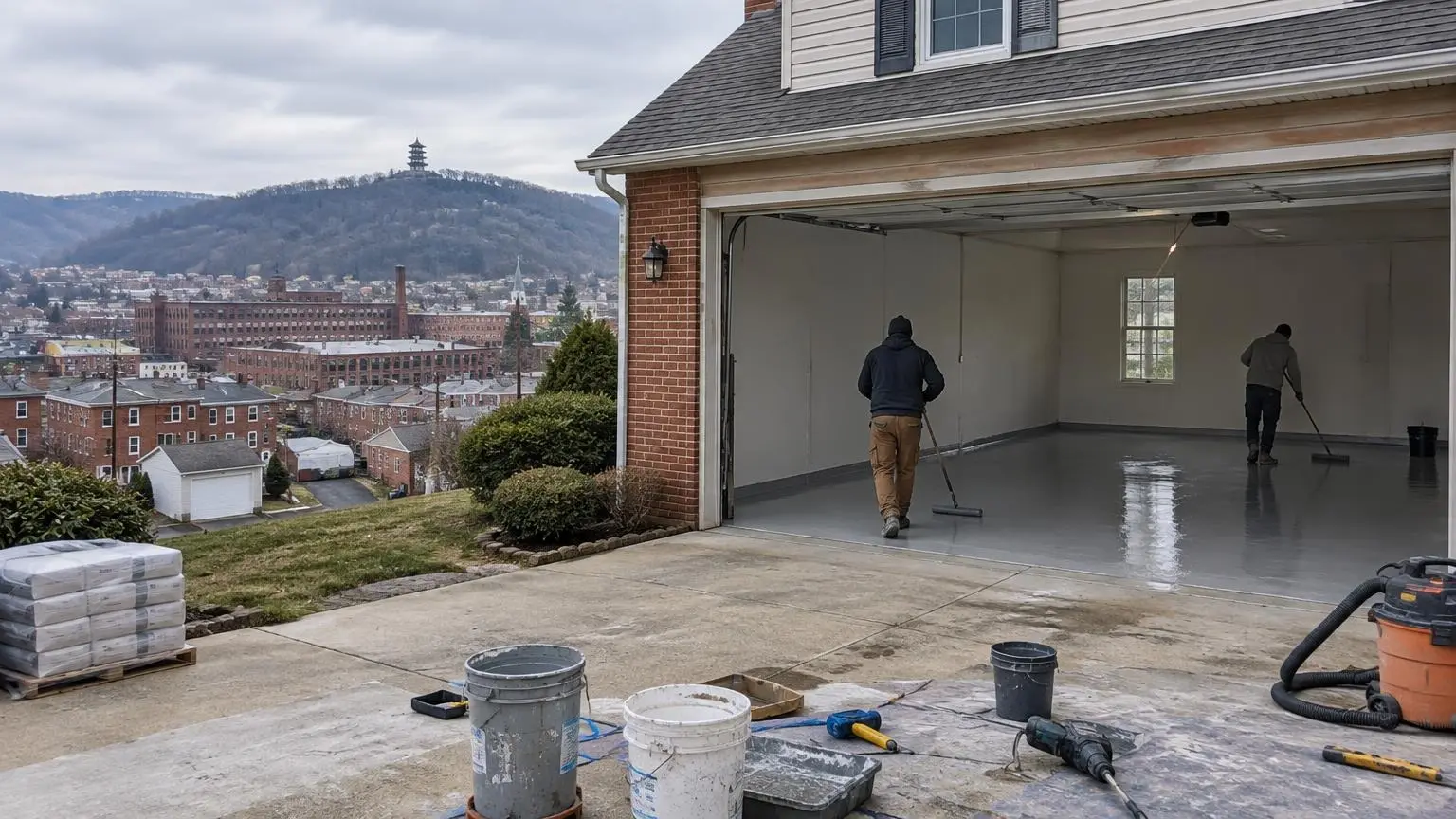
Garage floor coating in Reading has to deal with two kinds of garage. In the city, many homes have a small detached garage off the alley, often with an older, thinner slab that slopes toward the door. In Wyomissing, Spring Township and the newer parts of the county, attached two- and three-car garages are common. Both take the same punishment each winter: road salt and slush ride in on the car, melt, and soak into bare concrete.
What winter does to a bare garage slab
Reading averages about 28.5 inches of snow a season under the 1991 to 2020 normals at Reading Regional Airport, and January lows average 23°F. That means many nights below freezing and many afternoons above it. Salt water that soaks into concrete freezes and expands, and as it dries the salt crystallizes in the pores. Over time the surface flakes off. You see it first at the door and under the tires: scaling, pits and white rings where puddles dried. A sealed coating keeps the brine on top, where you can squeegee it out.
Signs it is time to coat
- Flaking or pitting near the door and in the tire paths
- White salt residue that does not wash out
- Oil and transmission stains that have soaked in
- Concrete dust that keeps coming back after sweeping
- A store-bought coating peeling where the tires sit
- Cracks and chipped control joints
- Puddles that sit in low spots after a storm
Why we grind instead of etch
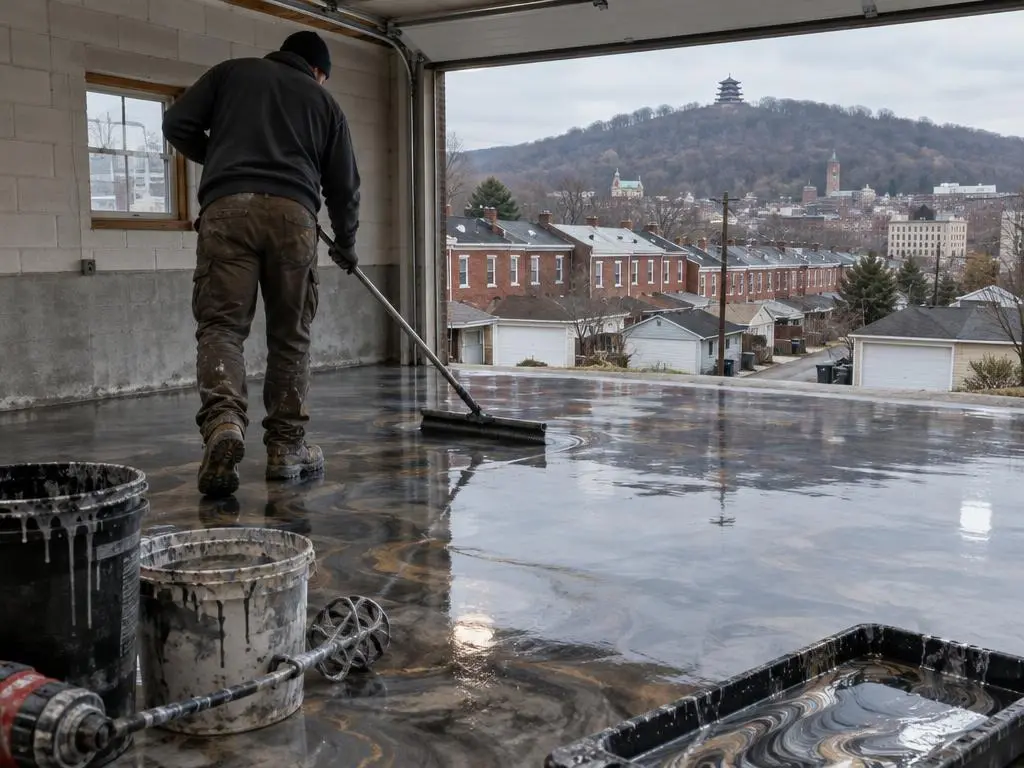
Most kit coatings rely on acid etching. Acid cleans the surface but does not remove weak, salt-damaged concrete, old sealers or paint, and coatings over those layers lift when hot tires sit on them. We grind the whole floor with diamond tooling, edges included, vacuum the dust, degrease oil spots, and repair cracks and spalls. If an old coating is on the floor, it comes off first. That is the step that decides how long the floor lasts.
Finishes that work here
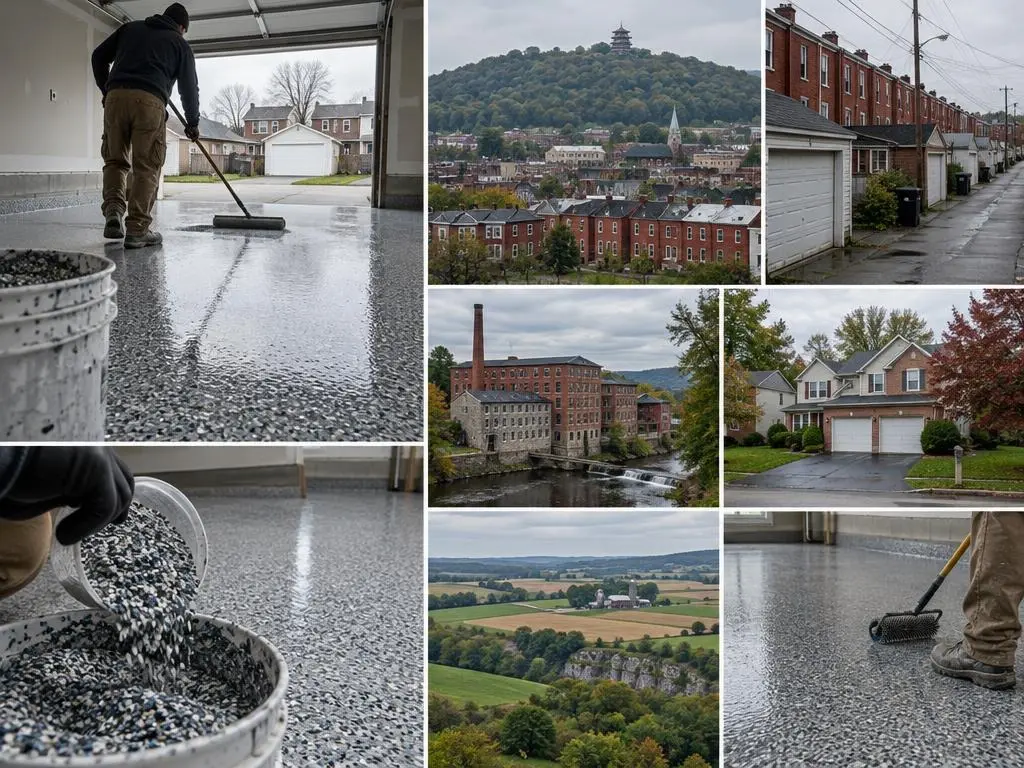
A full flake broadcast is the most common choice for Reading garages. It hides salt film and dust between cleanings and has a texture that grips when the floor is wet. A solid color with a light flake or anti-slip additive gives a cleaner look for workshops. Over either one, a polyaspartic topcoat adds UV and abrasion resistance. HomeGuide notes that polyaspartic can be applied from -30°F to 140°F and cures in one to two days, which helps when we are working in a cold garage in late fall or a hot one in July.
Alley garages and tight access
Detached garages behind rowhouses often have narrow doors, no power or a single weak outlet, and an alley that is hard to park in. We check access during the estimate and plan equipment and power for it. Older detached slabs may also be cracked through or settled. We tell you whether a crack is stable and can be filled, or whether the slab is moving and needs a different fix first.
Caring for the floor in winter
A coating does not make salt harmless. Brine left for weeks can still dull a topcoat. Push meltwater out with a floor squeegee, rinse the floor every few weeks during salt season, and use a containment mat under each car. Keep metal-edged shovels off the coating.
What This Covers
A garage coating covers the whole slab, from the door threshold to the back wall and up the edges if you want it.
Diamond grinding
The full floor ground to remove salt-damaged concrete, old sealers and paint, with dust collected as we go.
Crack, spall and joint repair
Cracks, chipped joints and pitted areas filled so the coating is continuous.
Base, flake or color, and topcoat
A bonded base coat, a flake broadcast or solid color layer, and a clear chemical-resistant topcoat.
Stem walls and steps
Coating carried up the short concrete curb at the walls and onto garage steps if you want them done.
Old coating removal
Peeling paint and failed kit coatings ground off before the new system goes down.
Typical Garage Floor Coating Costs
| Garage | Published range |
|---|---|
| Installed epoxy, per square foot | $4 to $10 |
| One-car garage (288 to 392 sq ft) | $1,200 to $3,900 |
| Two-car garage (400 to 576 sq ft) | $1,600 to $5,800 |
| Three-car garage (576 to 864 sq ft) | $2,300 to $8,600 |
| Two-car garage, polyaspartic | $2,000 to $6,900 |
| Crack and chip patching | $25 to $250 |
National ranges from HomeGuide's epoxy and polyaspartic cost guides, HomeAdvisor and Bob Vila. Reading-area prices can differ, and old coatings, damaged concrete and the finish you choose move the total. Your written estimate is the price.
How It Works
1. Estimate
We measure the garage, check the slab, note cracks, flaking, oil and any old coating, and look at access and power.
2. Prep
The floor is diamond ground, vacuumed and degreased, and cracks and spalls are repaired.
3. Coat
Base coat, flake or color, and topcoat, done in one or two days depending on the system and the weather.
4. Cure
We give you times for walking on the floor, moving things back and parking, based on the product and temperature.
Garage Floor Coating Questions
How much does it cost to coat a two-car garage in Reading?
HomeGuide's national range for a two-car garage is about $1,600 to $5,800 for epoxy and $2,000 to $6,900 for polyaspartic. Salt damage, an old coating that has to come off, and the finish you pick move the price. We give you a written number after we see the floor.
Should I pick flake or solid color for my garage?
Flake hides dirt and salt residue and adds grip, so it suits a garage that sees winter slush. Solid color with an anti-slip additive looks cleaner and works well for workshops. We bring samples to the estimate.
How soon can I park on a new garage floor?
HomeGuide says to wait 2 to 7 days before driving on standard epoxy, while polyaspartic systems are usually fully cured in 24 to 48 hours. We give you a specific time for your floor based on the products and temperature.
Can you coat a detached garage behind a rowhouse?
Yes. We check access, power and the condition of the slab during the estimate. Older detached slabs often need more crack repair, and we tell you if a slab is moving and needs another fix first.
Why did my store-bought garage epoxy peel?
Usually the prep. Kits rely on acid etching, which leaves weak or contaminated concrete in place, and thin coatings lift under hot tires. Grinding and a thicker system bond much better.
Garage Floor Coating Service Areas
- Epoxy Flooring in Reading, PA
- Epoxy Flooring in Wyomissing, PA
- Epoxy Flooring in West Reading, PA
- Epoxy Flooring in Shillington, PA
- Epoxy Flooring in Sinking Spring, PA
- Epoxy Flooring in Spring Township, PA
- Epoxy Flooring in Exeter Township, PA
- Epoxy Flooring in Muhlenberg Township, PA
- Epoxy Flooring in Cumru Township, PA
- Epoxy Flooring in Mount Penn, PA
- Epoxy Flooring in Kenhorst, PA
- Epoxy Flooring in Mohnton, PA
- Epoxy Flooring in Laureldale, PA
- Epoxy Flooring in Bern Township, PA
- Epoxy Flooring in Wernersville, PA
- Epoxy Flooring in Robesonia, PA
- Epoxy Flooring in Birdsboro, PA
- Epoxy Flooring in Amity Township, PA
- Epoxy Flooring in Boyertown, PA
- Epoxy Flooring in Fleetwood, PA
- Epoxy Flooring in Kutztown, PA
- Epoxy Flooring in Maidencreek Township, PA
- Epoxy Flooring in Leesport, PA
- Epoxy Flooring in Hamburg, PA
Get a Garage Floor Coating Estimate
Free on-site estimates for garage floor coatings in Reading and Berks County.